Georgetown Steel Mill Redevelopment
Lauren Fournier | September 21, 2026
Local News
Lauren Fournier | September 21, 2026
Local News
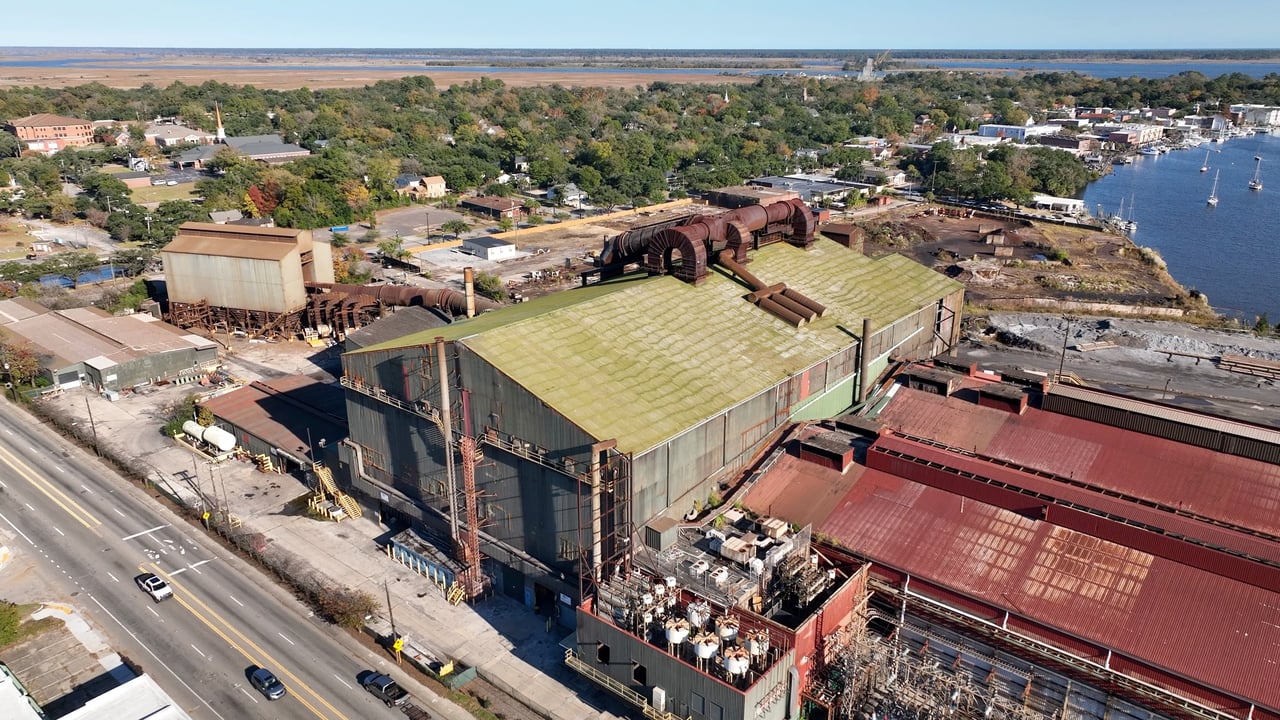
For anyone who has spent meaningful time in Georgetown, South Carolina, the former steel mill is more than an industrial property. Its towering structures have occupied a prominent position along the Sampit River for decades, becoming part of both the physical landscape of Georgetown and the economic story of generations of local families. Today, the approximately 66-acre former Liberty Steel property near downtown Georgetown is once again at the center of an important conversation about the future of the city. In September 2026, news broke that an agreement for River Development Equities to acquire and redevelop the former Liberty Steel property had been terminated, creating new uncertainty around what had been envisioned as a substantial transformation of Georgetown's industrial waterfront. Liberty Steel has indicated that conversations with other interested parties may continue, meaning the future of the property is far from settled. As a real estate advisor serving Georgetown and the surrounding South Carolina Lowcountry, I believe this is a story worth following closely because it is about much more than what happens to an old steel mill. It touches on land use, environmental restoration, public waterfront access, economic development, housing and ultimately the continued evolution of Georgetown as a place to live, work and invest.
River Development Equities, through Liberty River LLC, had been working toward acquiring the former Liberty Steel property and transforming the site into a new mixed-use district. The concept attracted significant attention because of both the scale and location of the property: approximately 66 acres of waterfront land immediately adjacent to an established historic city. Early plans contemplated a combination of residential development, retail and commercial space, light or clean manufacturing, parks and green space, while later concepts introduced possibilities such as restaurants, office space, public gathering areas, walking trails, a riverwalk, marina, amphitheater and better connections between the property, Georgetown's existing street network and the Sampit River. The larger vision was to take waterfront property that had been largely inaccessible to the public during generations of industrial use and reconnect it with the surrounding city. These plans were conceptual rather than a final approved development plan, but they illustrated why the site generated so much interest. Georgetown already possesses one of the most recognizable historic waterfronts in South Carolina, and extending public access and activity farther along the Sampit River could significantly influence how residents, visitors and future property owners experience the city.
Environmental considerations were always going to play an important role in that process. In March 2026, Liberty River entered into a Voluntary Cleanup Contract with the South Carolina Department of Environmental Services, an important step given the property's long industrial history. Soil, groundwater, surface water, sediment and soil vapor were among the areas expected to be evaluated as part of determining how the land could safely transition to future uses. By September, however, the purchase agreement between the developer and Liberty Steel had ended. Public reporting suggests that timing associated with governmental approvals, environmental work and the terms of extending the acquisition agreement contributed to the deal falling apart. What is important for residents and property owners to understand is that the termination of this particular agreement does not necessarily determine the long-term future of the land. The property remains one of the most significant redevelopment opportunities in Georgetown, and its location almost guarantees continued interest in what ultimately happens there.
To appreciate why this property matters so much, it helps to understand its history. The land predates the steel mill by centuries and has been tied to Georgetown's economic development through several distinct eras. Portions of the site were historically associated with Serenity Rice Plantation, dating to the early 1700s, before the western Georgetown waterfront transitioned increasingly toward industrial use. In the early twentieth century, Atlantic Coast Lumber Company operated a major lumber complex along Georgetown Harbor, helping establish Georgetown as an important center for lumber production and shipping. Following the decline of that industry, portions of the property were used by various petroleum, chemical, veneer and plywood operations before steel production became the defining use of the site.
Georgetown Steel Company developed the property into a steelmaking facility around 1970, producing wire rod and becoming one of the area's significant industrial employers. Over the following decades, the mill went through several ownership changes, shutdowns and restarts, reflecting broader changes in the American steel industry. ArcelorMittal closed the Georgetown operation in 2015 before Liberty acquired the facility in 2017 and restarted production the following year. Operations would later experience additional interruptions before steelmaking ultimately ceased in 2024. For generations of Georgetown families, however, the mill was never simply a landmark visible from across the river. It represented jobs, industry and the working-waterfront identity that has shaped Georgetown for hundreds of years. Any redevelopment of the site therefore represents more than a real estate project; it represents another major transition in the economic history of the city.
Georgetown's ability to evolve is one of the things that makes the community so interesting. Founded in 1729, Georgetown's relationship with the water has shaped its economy and identity from the beginning. Indigo and rice once moved through the port before giving way to lumber, paper, steel, maritime industries and commercial fishing. Today, those layers of history remain visible throughout the city. Historic homes shaded by mature live oaks sit only blocks from Front Street. Restaurants and locally owned shops overlook the harbor. Boats travel between the Sampit River, Winyah Bay, the Intracoastal Waterway and the Atlantic Ocean. Industrial facilities remain visible alongside eighteenth- and nineteenth-century architecture and some of the most distinctive natural landscapes in the Lowcountry. Georgetown does not feel like a coastal destination that was created for tourism. It feels like a real city that has existed and adapted for centuries, and that authenticity continues to be one of its greatest strengths.
That character is also part of what attracts buyers considering living in Georgetown, South Carolina. Georgetown offers a noticeably different lifestyle from many of the better-known resort-oriented communities along the South Carolina coast. It is a year-round community with a historic downtown, working waterfront, restaurants, shops, boating access, established neighborhoods and a strong connection to the surrounding rivers, marshes and Winyah Bay. From a real estate standpoint, buyers can find everything from historic homes near downtown to waterfront properties, established residential neighborhoods, larger homesites and communities extending throughout Georgetown County. Pawleys Island and Litchfield are also nearby, giving residents convenient access to the beaches and amenities of the Waccamaw Neck while maintaining the distinctive pace and personality of Georgetown itself.
What I often tell clients is that Georgetown appeals to people who want the Lowcountry without necessarily wanting a resort environment. There is history here, but there is also everyday life. There are working boats, neighborhood streets, historic architecture, generations of local families, small businesses, restaurants and an increasingly interesting mix of people who are discovering Georgetown for the first time. Its imperfections are part of what makes it genuine. For buyers moving from larger metropolitan areas or more heavily developed coastal markets, Georgetown can offer something that is becoming increasingly difficult to find: an authentic waterfront community that still feels connected to its history while also having meaningful opportunities ahead of it.
From a real estate perspective, it would be premature to assume that redevelopment of the former Georgetown Steel Mill—whether by River Development Equities or another future owner—will automatically result in rising property values or dramatically transform the local housing market. Too many details remain unresolved for that type of conclusion. What can be said is that a property of this scale and location has the potential to influence how downtown Georgetown connects with its waterfront and how people perceive the city as a place to live, visit and invest. Environmental remediation could return previously industrial land to productive use. New public waterfront areas could improve access to the Sampit River. Restaurants, retail, residential development, office space or recreational amenities could create additional activity near downtown. At the same time, residents will understandably continue asking questions about density, traffic, infrastructure, environmental conditions and how future development might fit within Georgetown's historic character.
The steel mill is also only one part of a much larger waterfront conversation. Nearby properties, including the former International Paper site and former port property, represent additional opportunities for redevelopment and long-term planning. Taken together, these areas raise an important question for Georgetown: What should the city's waterfront look like for the next generation? That conversation will involve economic development, preservation, housing, transportation, environmental concerns, tourism and the quality of life of existing residents. For homeowners and prospective buyers, these discussions matter because significant land-use decisions can influence how a community evolves over decades rather than simply over the next year or two.
Georgetown has reinvented itself many times before. Indigo gave way to rice. Rice eventually gave way to lumber and industrial manufacturing. Lumber was followed by paper and steel. Today, tourism, healthcare, professional services, small businesses, residential development and the broader coastal economy play increasingly important roles alongside Georgetown's remaining industrial and maritime activity. The closing of major industrial facilities should never be minimized, particularly because those businesses provided livelihoods for generations of local families. At the same time, the availability of significant former industrial waterfront property presents Georgetown with opportunities and decisions that few communities along the South Carolina coast will ever encounter on this scale.
The former Georgetown Steel Mill sits directly in the middle of that conversation. Whether the next chapter resembles the mixed-use vision previously presented by River Development Equities, another developer introduces an entirely different plan, or redevelopment takes years to fully materialize, the property will remain one of the most important development stories to watch in Georgetown. Its future has the potential to influence the waterfront, downtown, surrounding neighborhoods and broader perception of Georgetown for decades to come.
As a real estate advisor with Peace Sotheby's International Realty, I believe understanding a community means looking beyond individual homes and current listing prices. Development, conservation, infrastructure, economic investment and changing land use all become part of the real estate conversation, particularly in a place as historic and geographically unique as Georgetown. Helping clients understand those larger forces is an important part of helping them make informed decisions about where and how they want to live.
If you're considering buying a home in Georgetown, moving to Georgetown, exploring waterfront property or selling a home in Georgetown County, I would welcome the opportunity to be a local resource. I work throughout Georgetown, Pawleys Island, Litchfield, Murrells Inlet and the surrounding South Carolina coast, combining local market knowledge with the marketing resources and global reach of Peace Sotheby's International Realty. Whether you are just beginning to explore Georgetown or are ready to make a move, I am always available to help you better understand the market, the community and the opportunities available throughout this special part of the Lowcountry.
Stay up to date on the latest real estate trends.
Local News
What Happened, What Was Planned & What It Means for Georgetown, SC
Real Estate Industry
A Clear Guide to Buyer Agency, Representation, and Your Rights as a South Carolina Homebuyer
Communities
Communities
A New Chapter for One of Georgetown County’s Historic Landscapes
My Listings
How Strategic Marketing and the Sotheby’s International Realty Network Helped Sell 204 Bamboo Loop, Unit 202
My Listings
Real Estate Market Updates
Real Estate Marketing
The Danger of Overpricing
The Buying Process
Discovering your home, loving your future, through my passion.